← Back to curriculum
The Global Pharmacovigilance Framework · Section 2.1
Key Regulatory Authorities and Their Roles
~6 min read · The Drug Safety Coach — Global PV Career Course
 Watch on YouTube
Key points
- •EMA (EU) — EudraVigilance, GVP Modules I–XVI, PRAC
- •FDA (US) — FAERS (spontaneous) + Sentinel (active RWD surveillance)
- •CDSCO (India) — PvPI, 250+ ADR Monitoring Centres, VigiFlow India
- •PMDA (Japan) — JADER database, aligns with ICH
- •MHRA (UK) — Yellow Card scheme, one of the world’s oldest reporting systems
- •WHO-UMC (Global) — VigiBase, 32M+ ICSRs from 150+ countries — the hub all national systems feed into
Listen to this lesson
Read in:
Full text
Pharmacovigilance operates as a global network of science, systems, and shared responsibility. No single country can independently safeguard patients in an era where medicines cross borders within hours and novel therapies emerge at a pace no single regulatory authority can track alone.
Each regional regulatory authority contributes distinctly to the global safety ecosystem. The EMA oversees EudraVigilance and maintains the GVP Modules that most global PV organisations treat as the de facto international standard, regardless of headquarters location. The FDA operates FAERS for spontaneous reports and the Sentinel Initiative for active, real-world-data-based surveillance — giving it denominator data spontaneous reporting alone can’t provide.
India’s CDSCO regulates PvPI, coordinating the Indian Pharmacopoeia Commission as National Coordination Centre across more than 250 ADR Monitoring Centres. Japan’s PMDA manages JADER and integrates risk management under the PMD Act. The UK’s MHRA operates the Yellow Card scheme — one of the world’s oldest spontaneous reporting systems — maintaining its own post-Brexit framework aligned with EU GVP. Canada’s Health Canada and Australia’s TGA round out the major national systems, each aligned to ICH guidelines while running their own database and surveillance infrastructure.
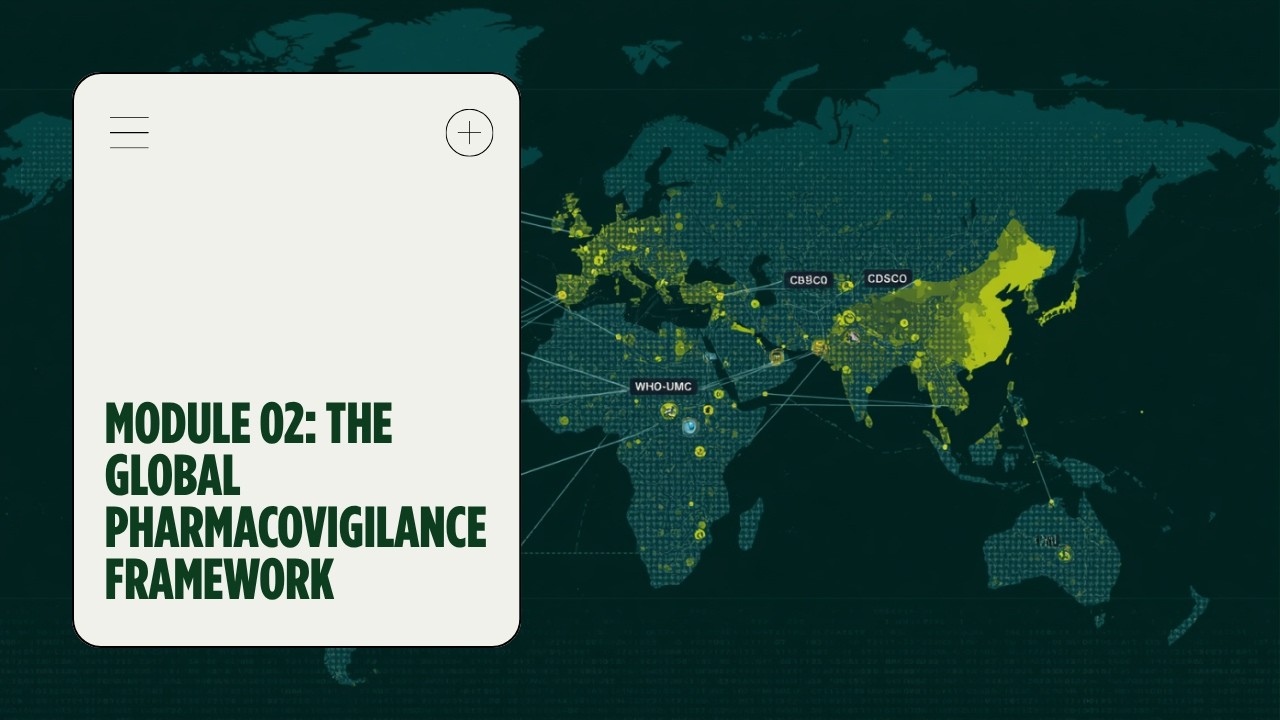
At the centre sits WHO/Uppsala Monitoring Centre, hosting VigiBase — the world’s largest pharmacovigilance database with more than 32 million ICSRs from over 150 WHO member countries, analysed through VigiLyze and increasingly through the 2025 AI Hub.
The operational details vary more than the high-level roles above suggest. FDA’s 15-day expedited clock for serious, unexpected postmarketing cases runs through FAERS in E2B(R3) format (mandatory since January 2024); EMA runs the same 15-day serious / 90-day non-serious split into EudraVigilance, also E2B(R3); MHRA mirrors that 15/90-day structure into the Yellow Card Scheme via its own Gateway. PMDA’s marketed-product timeline is 7 or 15 days for serious cases depending on severity, 30 days for non-serious — a genuinely different split worth not assuming is identical to the FDA/EMA pattern. TGA is the outlier on format: it still runs E2B(R2) only, with no committed date for R3 adoption, which trips up anyone who assumes every ICH-aligned authority has already moved. The full breakdown — legal basis, exact submission gateway, and every timeline by case type — is in the Regulatory Guidelines reference.
The practical implication for anyone working in PV: a signal doesn’t stay local. A cluster of similar cases reported through PvPI in India can surface in VigiBase within weeks, be picked up by an EMA or FDA signal-detection run, and trigger a coordinated label review across three continents — long before any single country would have reached statistical significance on its own. That interconnection is not incidental to the job; it is the reason global regulatory literacy is now a baseline expectation, not a specialism.
Note
Together, these systems create a web of signal detection, information sharing, and coordinated action that transcends national boundaries. A signal detected in VigiBase from a West African country may trigger a regulatory assessment in India, the EU, and the US simultaneously. This interconnection is the defining feature of modern global PV.
Quick check
Test yourself before moving on — no pressure, just click an answer.
1. Which two data sources give the FDA denominator (exposure) data that spontaneous reporting through FAERS alone cannot provide?
2. What role does WHO/Uppsala Monitoring Centre play relative to national PV systems like PvPI, FAERS, or EudraVigilance?
Complete this lesson to continue